
Throat Hit in Disposable Vapes: What Controls It?
When someone picks up a disposable vape for the first time, they usually talk about flavor or nicotine strength. But after a few days of use, one thing becomes clear: flavor alone doesn’t decide satisfaction. What really determines whether a disposable feels “right” or “wrong” is the throat hit. That subtle or sometimes sharp sensation you feel at the back of your throat is what connects vaping to the muscle memory of smoking. For many former smokers, it’s the reason they either stick with vaping—or give up on it entirely.
Disposable vapes are often seen as simple devices, but the reality is different. Behind that compact design sits a carefully balanced system of airflow, heat, liquid chemistry, and user interaction. All of these elements work together to shape throat hit. Understanding how throat hit works doesn’t just help you vape better. It helps you choose smarter, avoid discomfort, and get consistent satisfaction without constantly switching devices.
What Is Throat Hit in Vaping?
Throat hit is the physical sensation felt when vapor passes through the throat during inhalation. It’s not flavor, and it’s not nicotine buzz. It’s a tactile response—your body reacting to vapor density, temperature, and chemical composition. For smokers transitioning to vaping, throat hit acts as a form of reassurance. It tells the brain, “Yes, nicotine is being delivered.” Without it, vaping can feel empty, even if the nicotine level is technically high.
Unlike cigarettes, where throat hit is a side effect of combustion and smoke irritation, vaping throat hit is designed. Manufacturers tune it deliberately, especially in disposable vapes where the experience cannot be adjusted by the user. Some people prefer a smooth, almost invisible inhale. Others want a strong kick that closely resembles a cigarette pull. Neither preference is right or wrong—it simply depends on how the device is built and how it’s used.
Nicotine Strength & Throat Hit
Nicotine plays a central role in throat hit, but it’s often misunderstood. Higher nicotine concentrations generally increase throat hit because nicotine stimulates nerve endings in the throat. However, disposable vapes rarely use traditional freebase nicotine anymore. Instead, they rely on nicotine salts, which behave very differently. Nicotine salts allow higher strengths without the extreme harshness that freebase nicotine would cause at the same level. This is why a 5% disposable vape can feel smoother than an older low-strength vape from years ago.
That said, nicotine strength still matters. A low-nicotine disposable may feel smooth to the point of being unsatisfying, while a very high-strength option can feel overwhelming if paired with tight airflow or high heat. The real throat hit experience comes from how nicotine interacts with other components—especially airflow and temperature. Nicotine alone doesn’t create balance; it only sets the baseline.
PG/VG Ratio and Throat Sensation
The base liquid inside a disposable vape is made of propylene glycol (PG) and vegetable glycerin (VG). These two ingredients quietly shape how vapor feels in the throat.PG carries flavor efficiently and produces a sharper sensation when inhaled. VG, on the other hand, creates thicker vapor and a smoother inhale. Disposable manufacturers carefully blend these two to match the coil and airflow design.
If a disposable feels crisp and punchy despite moderate nicotine strength, it often has a slightly higher PG ratio. If it feels soft and cloud-heavy, VG is likely more dominant. Unlike refillable devices, disposables don’t allow users to customize liquid ratios. This means every disposable is pre-engineered to deliver a specific throat hit profile. When users say, “This brand feels smoother” or “That one hits harder,” PG/VG balance is often the invisible reason.
Airflow Design and Throat Hit
Airflow is one of the most underestimated factors in disposable vapes. Because users can’t adjust airflow manually, manufacturers control it internally. The size of the air intake holes, the length of the air path, and the width of the chimney all influence how vapor moves toward the throat. A tighter airflow restricts air intake, making the vapor denser and warmer. This increases throat hit even if nicotine levels remain unchanged. A looser airflow introduces more air into the vapor, cooling it and softening the sensation.
This is why two disposable vapes with identical nicotine strength can feel completely different. One may deliver a cigarette-like pull, while the other feels airy and smooth. Airflow also affects how quickly vapor reaches the throat. Faster vapor velocity tends to intensify throat sensation, while slower movement spreads the sensation more evenly.
Coil Type & Heat Output
Heat is what turns e-liquid into vapor, and how that heat is generated matters more than most users realize. Older disposable vapes relied on traditional wire coils, which heat unevenly. This often caused inconsistent throat hit—sometimes too harsh, sometimes too weak. Modern disposables increasingly use mesh coils, which distribute heat evenly across a larger surface area.
Mesh coils create smoother vapor while maintaining intensity. Instead of sharp spikes of heat, they provide a steady thermal output. This results in a throat hit that feels controlled rather than aggressive. Heat output is fixed in disposables, meaning wattage and temperature are preset. Devices designed for stronger throat hit usually operate at slightly higher temperatures, producing warmer vapor that stimulates the throat more effectively.When users describe a disposable as “warm” or “cold,” they’re often describing how heat output shapes throat sensation.
Puff Style & User Behavior
Even with perfect engineering, throat hit still depends heavily on how the user inhales. Disposable vapes are primarily designed for mouth-to-lung use. This means vapor is drawn into the mouth first, then inhaled into the lungs. When users inhale too aggressively or try direct lung hits, the experience often feels weaker or unbalanced.
Short, controlled puffs concentrate vapor and enhance throat hit. Long, airy draws dilute vapor with excess air, softening the sensation. This is why some users complain about weak throat hit without realizing their puff style is the cause. Frequency also matters. Chain vaping can oversaturate the throat and make the hit feel harsher over time, while spaced puffs keep the experience consistent. Disposable vapes reward moderation and technique more than power.
Why Disposable Vapes Feel Different from Cigarettes
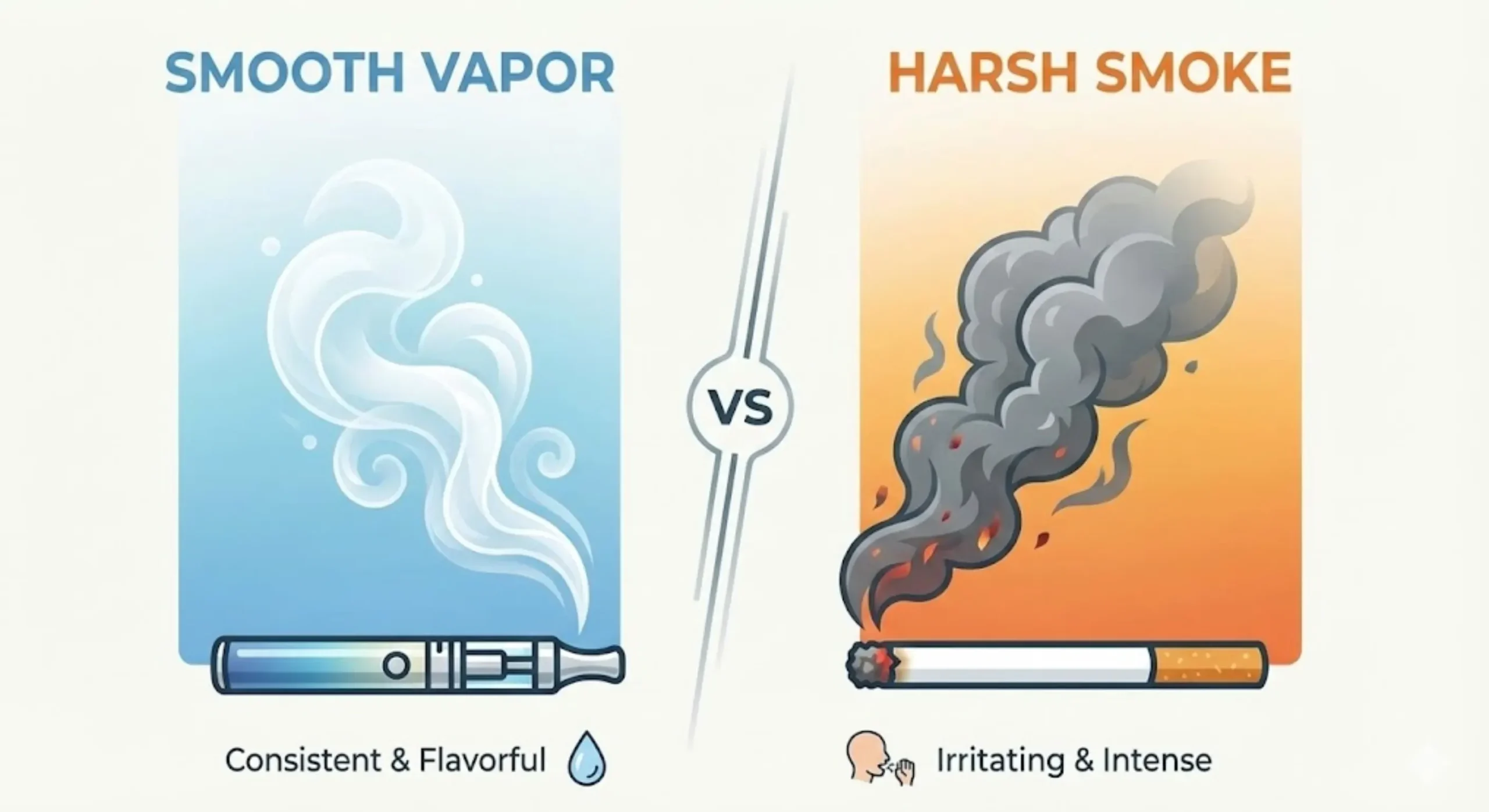
Many smokers expect disposable vapes to feel exactly like cigarettes, but the sensation is fundamentally different. Cigarettes create throat hit through smoke, combustion heat, and chemical irritation. Disposable vapes generate aerosol vapor at controlled temperatures without burning anything. The throat hit is cleaner, more predictable, and less damaging to throat tissue. This difference becomes especially clear when comparing Disposable Vapes vs Cigarettes, where smoke harshness is replaced by engineered vapor delivery. Some smokers initially feel that disposables are “too smooth.” Over time, many realize that the satisfaction comes not from harshness, but from consistency and nicotine efficiency.
How to Choose the Right Throat Hit
Choosing the right throat hit isn’t about chasing the strongest option available. It’s about matching your background and expectations. Someone transitioning from heavy smoking may need a tighter airflow and higher nicotine to feel satisfied. A casual user or social vaper may prefer a smoother inhale that doesn’t irritate the throat. Beginners often make the mistake of choosing extremely high nicotine disposables, assuming stronger is better. In reality, this can cause discomfort and coughing. Resources like Best Disposable Vapes for Beginners help new users find balanced options that deliver satisfaction without overwhelming throat hit. The best throat hit is the one you stop thinking about because it feels natural.
Throat Hit Consistency Over Time
One concern users often raise is whether throat hit changes as a disposable empties. As battery voltage drops near the end of a device’s life, heat output can decrease slightly. This may soften throat hit, especially in lower-quality disposables. Well-designed devices compensate for this by regulating power more consistently. Storage also matters. Heat exposure can thin e-liquid and intensify throat hit temporarily, while cold conditions can mute sensation. When a disposable delivers consistent throat hit from first puff to last, it’s usually a sign of good internal engineering rather than higher nicotine alone.
Final Thoughts: Throat Hit Is a System, Not a Setting
Throat hit in disposable vapes isn’t controlled by one single factor. It’s the result of nicotine chemistry, airflow design, coil technology, heat output, and user behavior working together.This is why chasing numbers—nicotine percentage, puff count, or brand hype—often leads to disappointment. True satisfaction comes from understanding how these elements interact. When everything is balanced, throat hit doesn’t feel harsh or weak. It simply feels right—and that’s what keeps users coming back to the same disposable again and again.